


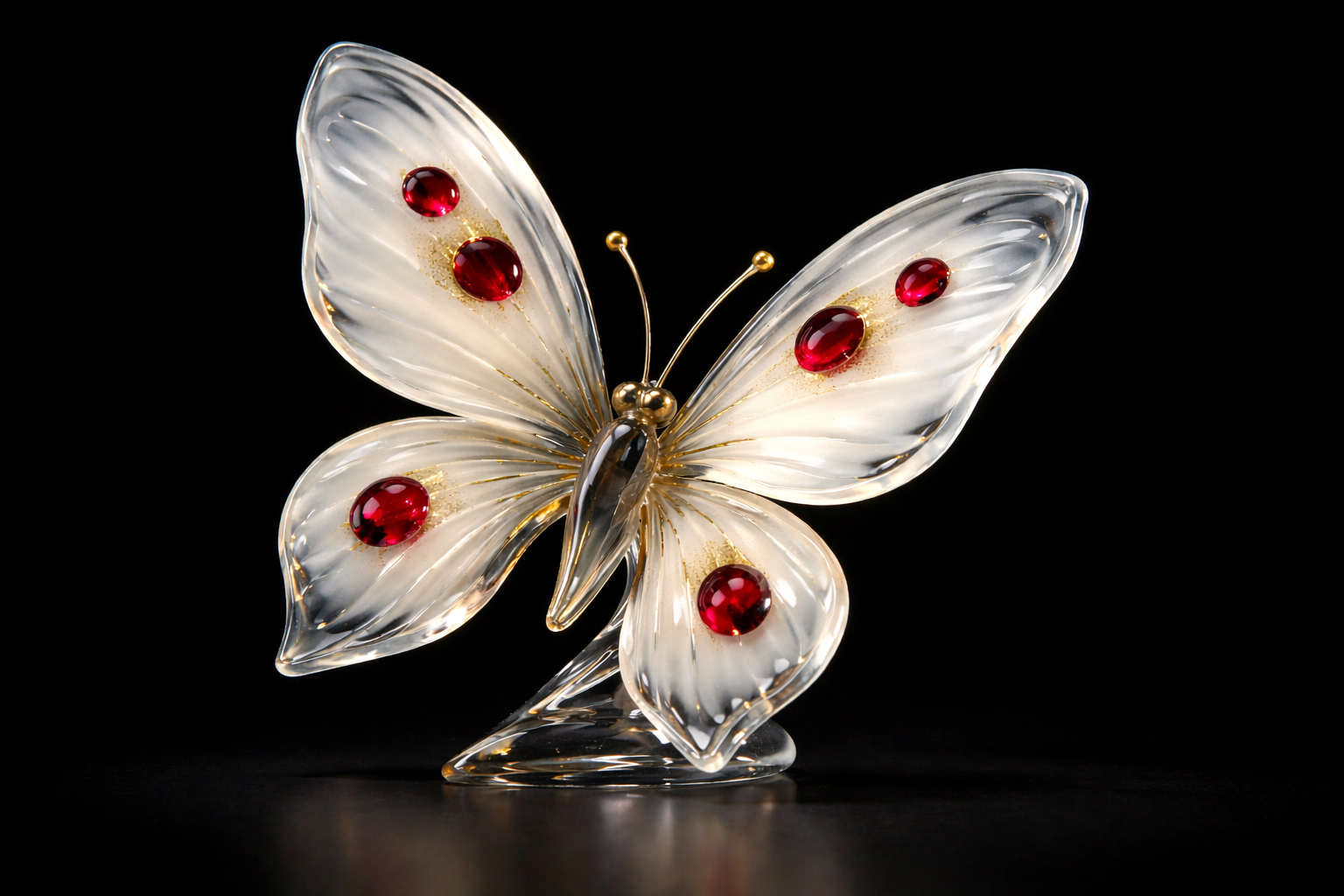

The Apollo Butterfly (Parnassius Apollo) is one of the most graceful and elusive presences found in Europe’s mountain landscapes. It inhabits highland plateaus, montane forests, and montane grassland, where the air is crisp and light shifts quickly throughout the day. Its flight is slow and deliberate, alternating gentle glides with quiet pauses on wildflowers. Drawn to open, sunlit spaces, it remains deeply tied to a delicate balance of rock, vegetation, and climate. Its appearance is brief and seasonal, an almost fleeting gift of the Alpine and Apennine highlands.
Across montane grassland, the Apollo Butterfly seems to hover between sky and earth. Its movement is never frantic; instead, it follows the unhurried rhythm of high altitudes, where every gesture feels intentional. Within montane forests, it stays mostly at the edges, favoring bright clearings and grassy slopes, while on highland plateaus it rides soft air currents to travel effortlessly. Its presence speaks of landscapes still intact, where nature preserves an ancient and fragile equilibrium.

Reimagined as a Murano glass sculpture, the Apollo Butterfly would become an artwork defined by visual lightness and transparency. The wings could be crafted from translucent lattimo glass, crossed by delicate internal veining and subtle touches of opaline red, like suspended inclusions within the molten glass. The slender, harmonious body would emerge in clear crystal, dotted with micro-bubbles that evoke the rarefied air of high elevations. As light refracts through the glass, the butterfly would feel alive, shifting in character with every change of illumination.
Portraying the Parnassius Apollo butterfly is, above all, a way to tell the story of the fragility of mountain ecosystems. In glass, it would transcend pure decoration, becoming a symbol of balance and respect, where the transparency of the material mirrors the lightness of flight and the pristine quality of high-altitude landscapes.
In the Alpine and Apennine regions of Europe, the Apollo Butterfly is often regarded as a symbol of purity, elevation, and unspoiled nature. Its name recalls the god Apollo, long associated with light and harmony, making this species an emblem of rare, luminous beauty. In both ecological and cultural contexts, it is also seen as an indicator of healthy environments, closely linked to the preservation of mountain habitats.

This Murano Glass Apollo Butterfly is a Concept Art piece from the Arthropods species. (Insects)
The Apollo Butterfly inhabits biomes such as: Highland Plateaus, Montane Forests, Montane Grasslands. See all (Biomes).

Leave a Reply