


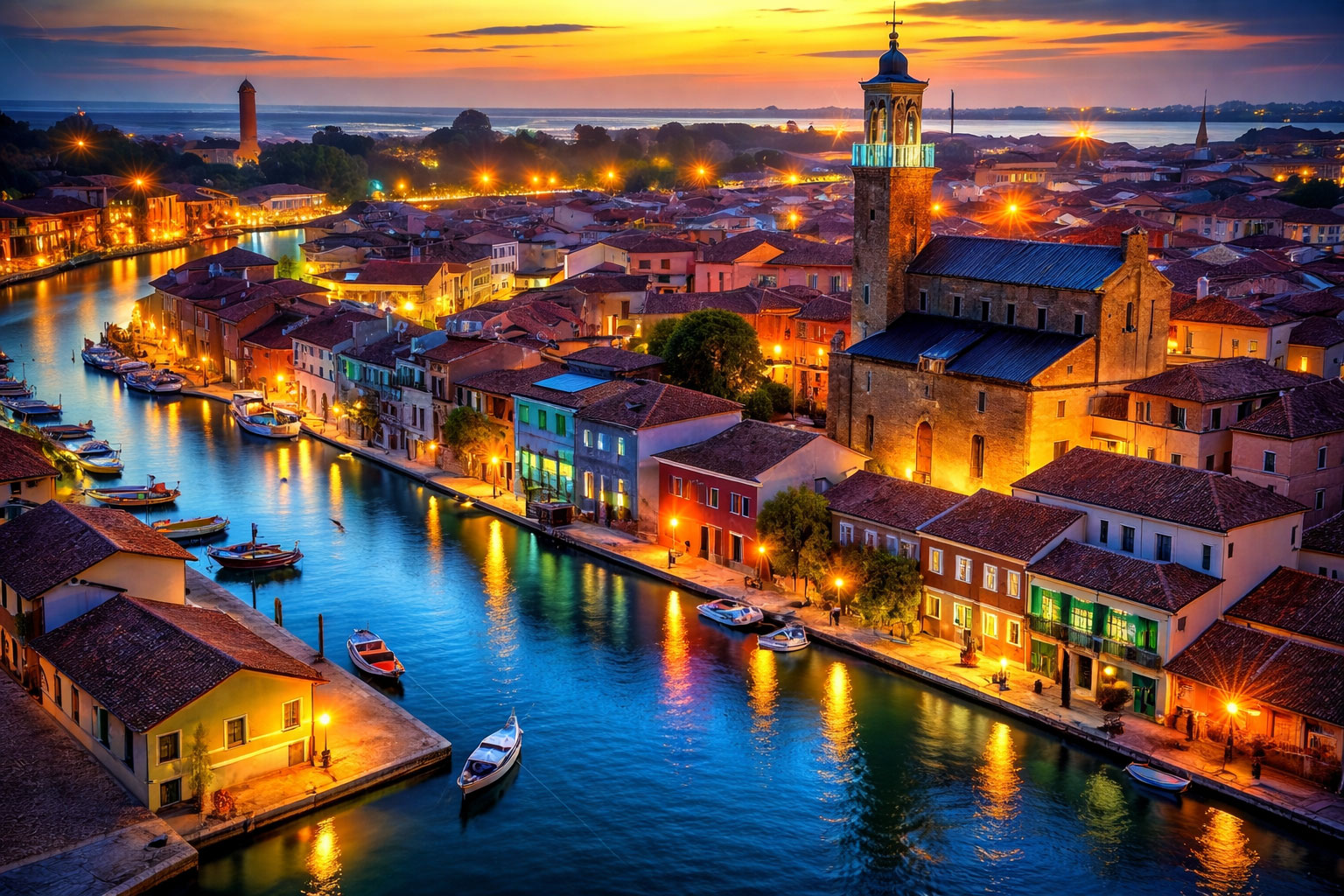

The Island of Murano, located in the Venetian Lagoon, is globally renowned as the birthplace of Murano glass, one of Italy’s most celebrated artistic traditions. Just a short vaporetto (public transport vessel) ride from Venice, Murano has been a singular center of craftsmanship for over 7 centuries, where art, technique, and heritage come together in a cultural legacy unlike any other.
Situated northeast of Venice, in the northern lagoon, Murano is made up of 7 interconnected islands linked by bridges. Its urban landscape is shaped by canals and defined by the Grand Canal of Murano, the island’s main artery, lined with historic palaces, centuries-old glass furnaces, and artisan workshops. Thanks to its proximity to Venice and its strong independent identity, Murano remains one of the top destinations for travelers seeking an authentic encounter with the true tradition of Venetian glassmaking.
The History of Murano Glass officially begins in 1291, when the Republic of Venice ordered all glass furnaces to be moved from the city center to Murano. This strategic decision served two purposes: reducing the risk of devastating fires and safeguarding the closely guarded secrets of glassmaking techniques. From that moment on, Murano evolved into a highly specialized production hub, giving rise to groundbreaking innovations such as:
- crystal-clear glass (cristallo);
- milk glass (lattimo);
- filigree glass;
- millefiori and murrine;
- aventurine glass.
These techniques continue to define the identity of authentic Murano artistic glass today.
The Master Glassmakers of Murano once held exceptional social status. As keepers of proprietary knowledge, they passed their skills down through generations, shaping the island’s worldwide reputation. Even today, true Murano glass is distinguished by handcrafted production, mouth-blown techniques, and hot glass shaping, setting original works apart from mass-produced imitations. Visiting Murano is like stepping into an open-air museum devoted entirely to glass art, with highlights including:
- the Murano Glass Museum, chronicling centuries of glassmaking history;
- the Basilica of Saints Mary and Donatus, a landmark of Venetian-Byzantine architecture;
- Historic glass furnaces, many of which are still active;
- Artisan workshops and contemporary studios.
Every corner of the island reflects the deep bond between place and glass artistry.
In the modern era, Murano continues to stand as a benchmark for high-quality artistic glass. Alongside traditional techniques, contemporary artistic expressions and collaborations with international designers help renew Murano’s visual language while preserving its historic soul. Today, the Island of Murano represents a rare and valuable balance between craft heritage, modern creativity, and the preservation of Venice’s cultural identity.
Return to the main page: Murano Glass Heritage.
All main articles: Murano Glass Heritage (11).

Leave a Reply