


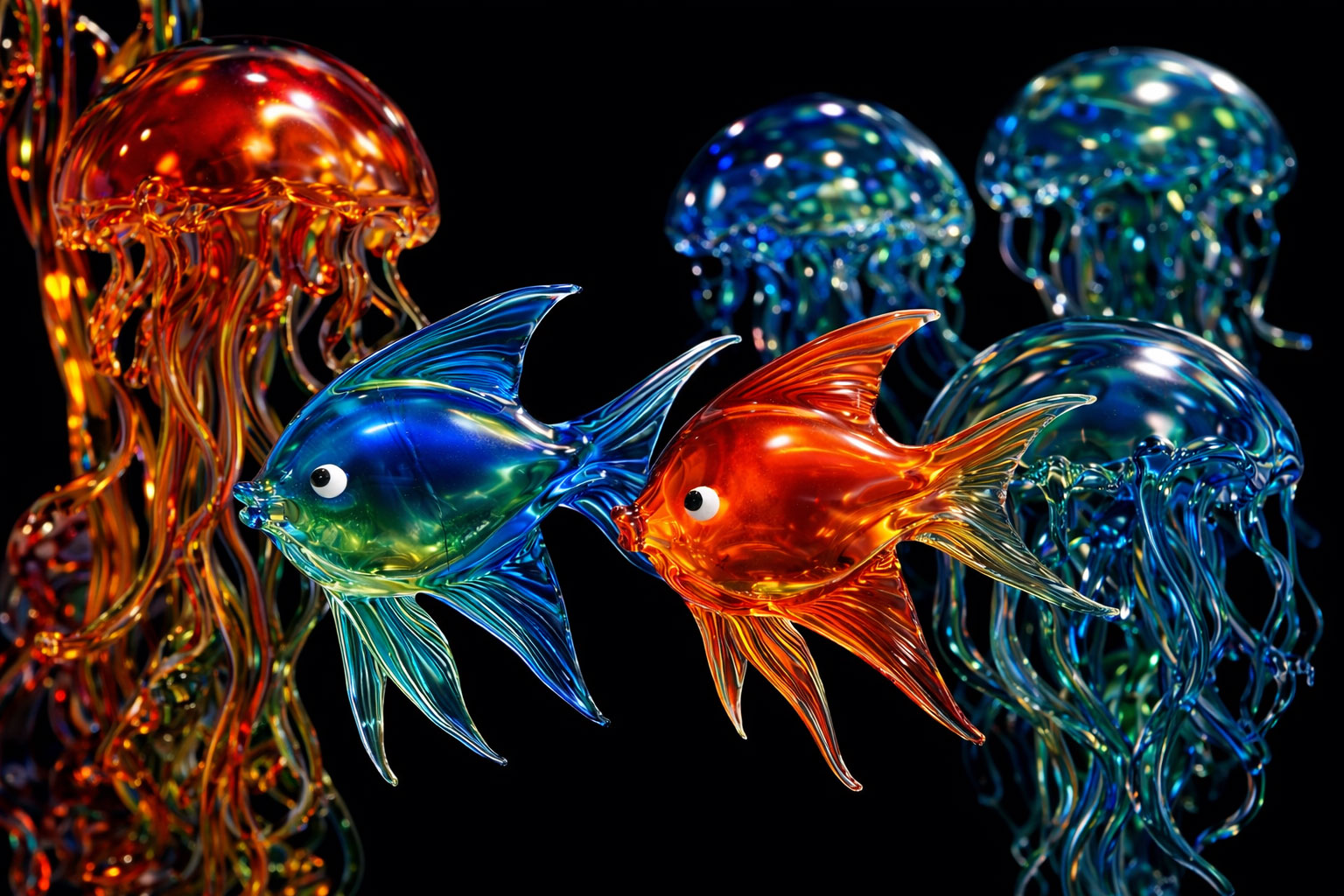

Murano glass stands as one of the most refined artistic expressions of Italian craftsmanship. Born on the island of Murano, in the heart of the Venetian Lagoon, this form of artistic glass is the result of centuries-old knowledge that blends skilled hands, material science, and aesthetic sensitivity. For more than 700 years, Murano glass has been made entirely by hand in Murano’s historic glass furnaces, earning worldwide recognition for its quality, beauty, and unmistakable uniqueness.
Murano glass is artistic glass crafted exclusively by Venetian master glassmakers using traditional techniques passed down through generations. Its origins lie in the fusion of ultra-pure silica, soda, lime, and mineral oxides which, when heated to extremely high temperatures, become a glowing, molten material ready to be shaped. Every piece is born from an unrepeatable human gesture, making true industrial replication impossible.
What sets Murano glass apart is the purity of the material, the depth of its colors, its transparency, and the presence of subtle imperfections that testify to authentic hand craftsmanship. Each creation tells a story of fire, time, and absolute control over matter, where even the slightest change in temperature or movement can alter the final result.
The roots of Murano glass reach back to Roman and Byzantine traditions, but in 1291 the Republic of Venice officially established Murano as its glassmaking center by relocating all furnaces to the island. This decision protected the city from fire while safeguarding production secrets, transforming the Murano Island into a closed, highly specialized hub of glassmaking excellence.
Between the Middle Ages and the Renaissance, Murano became the world’s leading reference point for glass art. Murano masters perfected Venetian crystal, developed groundbreaking techniques, and elevated glass to a noble material sought after by European courts and aristocratic residences.
In the modern era, Murano glass continues to evolve without losing its connection to tradition. Alongside classic forms, contemporary interpretations, conceptual works, and collaborations with designers and architects demonstrate that this art form is still alive, relevant, and constantly reinventing itself.
Creating a Murano glass piece is a complex process that begins with preparing the glass mixture and culminates in controlled cooling. Molten glass is shaped by hand through glassblowing or hot sculpting, using traditional tools and deep knowledge of how glass behaves. Slow, gradual cooling is essential to ensure long-term stability and durability.
Over the centuries, Murano has developed techniques that are now famous worldwide. Sommerso creates extraordinary color depth through layered transparent glass; murrine produce intricate geometric patterns; filigrana weaves fine glass threads with remarkable precision. Aventurine introduces shimmering metallic reflections, lattimo mimics porcelain, and chalcedony glass forms unique marble-like veining impossible to replicate.
Alongside these historic techniques, decorative processes such as balloton, rigadin, and zanfirico have emerged, together with modern interpretations that expand the expressive language of glass while preserving its artisanal soul.
The global reputation of Murano Glass is built on the union of technical excellence and cultural value. Every piece is unique, made with premium materials and shaped by a tradition that has never been interrupted. At the center of this universe stands the master glassmaker, a guardian of a rare knowledge that requires years of practice and artistic sensitivity. The result is a distinctive aesthetic defined by intense colors, transparency, and light effects that industrial processes simply cannot reproduce.
Recognizing Authentic Venetian Murano Glass means observing the quality of craftsmanship, the depth of color, and the presence of details only the human hand can create. The Vetro Artistico® Murano trademark offers official certification, while provenance from a Murano furnace and the master’s signature remain key indicators in distinguishing originals from the countless imitations on the market.
The value of Murano glass goes far beyond the object itself. It is Venetian cultural heritage, a work of art, a symbol of Made in Italy, and a living testimony to ancient knowledge. Each piece embodies a balance between fragility and strength, tradition and innovation, allowing it to transcend time.
Murano glass is not merely a decorative material, but an artistic language born from fire and shaped by human hands. Understanding its history, techniques, and value means connecting with one of the world’s most fascinating craft traditions—still alive today and continually evolving.
Return to the main page: Murano Glass Heritage.
All main articles: Murano Glass Heritage (11).

Leave a Reply